Lixel K2 available to rent now.Request availability
Head-to-head · Educational comparison

Handheld SLAM vs tripod scanner.

A workflow-level comparison, model-agnostic: capturing continuously on the move with handheld SLAM, versus capturing from fixed tripod stations and registering them. The Lixel K2 is the handheld SLAM example Volumet rents.

Workflow A · Handheld SLAM (Lixel K2)
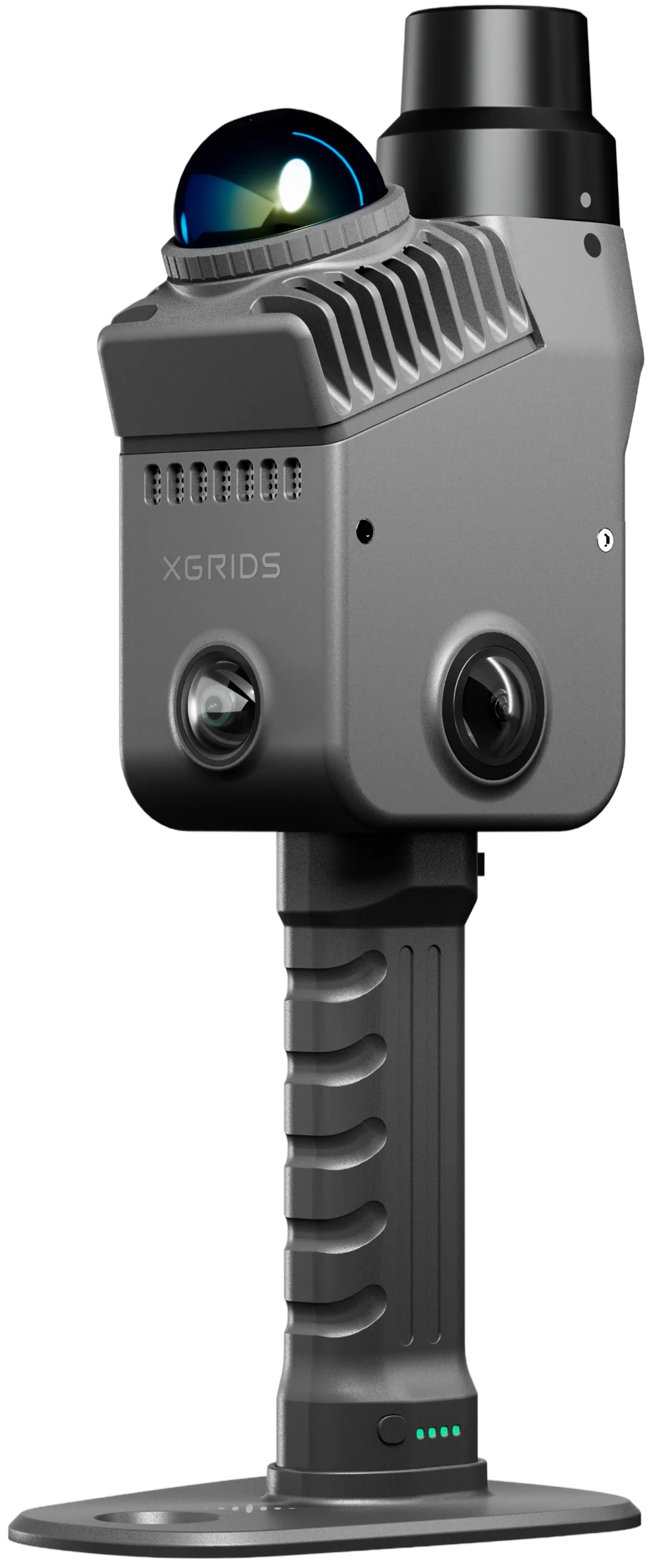
XGRIDS Lixel K2
XGRIDS Lixel K2

Handheld SLAM LiDAR · built-in RTK · point cloud, mesh & 3DGS from one walk.

S$1,800/ week · dry rental from
Available to rent in Singapore
Request availability
Workflow B · Tripod stations
tripod scanner · reference image
Tripod scanner workflow

Static station-by-station capture with registration — the classic terrestrial workflow.

third-party device
Not supplied or rented by Volumet
Jump to spec comparison
At a glance

Who wins each category.

A quick read on where each workflow leads. These reflect typical workflow character for short-term rental projects — not lab benchmarks.

On-site speedHandheld SLAM

Continuous motion, no station setups.

Structured accuracyTripod scanner

Fixed stations favour tight tolerances.

Access-limited sitesHandheld SLAM

Stairs, tight and occupied spaces in one walk.

Per-station detailTripod scanner

High density from each fixed position.

Output rangeHandheld SLAM

Point cloud, mesh and 3DGS from one pass.

Rental access in SGLixel K2

Handheld SLAM available weekly to rent.

Quick answer

Choose handheld SLAM when speed and access matter most — you walk the space and capture continuously, covering multi-room and multi-level sites in far fewer site hours, with point cloud, mesh and 3DGS from one pass. Choose a tripod scanner workflow when the job is built around structured, station-by-station capture in contained areas and your team runs an established registration pipeline that favours per-station precision. Neither is universally better. For most short-term Singapore rental projects the handheld SLAM workflow — exemplified by the Lixel K2 — gets usable data faster; where structured survey precision is the deliverable, the tripod workflow remains the reference.

Side by side

Category by category.

AXGRIDS Lixel K2
BTripod scanner workflow

Workflow & motion

01
Capture motion
ContinuousOn the move
StaticStation by station
Setups requiredLower is faster
NoneWalk-through
One per station
Site timeFor multi-room coverage
LowFewer hours
Higherper-station setup

Accuracy & control

02
Accuracy characterDefine tolerance first
~1 cmrelative
mm-classper stationTighter
Depends on registration
SLAM-tracked
Stations registered
Georeferencing
RTK / PPK where possible
Control points / targets

Environments

03
Occupied / cluttered sites
Keep moving
Needs line of sight
Stairs & tight spaces
Yes — single walk
Repositioning needed
Contained, stable spaces
Good
IdealStructured

Outputs & access

04
3D Gaussian Splatting
Yes — same walk
Not native
Dense per-station cloud
Good
Very highDenser
Rent in SingaporeHandheld SLAM example
Lixel K2 — weekly
Model-dependent

Bars and category winners describe typical workflow character for short-term rental projects, not lab benchmarks. Real-world accuracy depends on site conditions, capture technique, control, and processing.

Best fit

Which one fits your project?

Choose handheld SLAM when…
  • Speed and coverage drive the job
  • Sites are occupied, tight or multi-level
  • You want point cloud + 3DGS in one walk
  • Short site-access windows
Choose a tripod workflow when…
  • Capture is contained and structured
  • Survey-grade tolerances are mandated
  • Your team runs registration pipelines
  • Per-station detail beats speed
Choose K2 rental when…
  • You want to run the SLAM workflow
  • A short window, days or weeks
  • You want the dataset, not a service
  • Budget favours weekly rental
Singapore context

The Singapore rental angle.

In Singapore, site access is often the deciding factor: occupied offices, live construction, short renovation windows. The handheld SLAM workflow usually fits the window a site manager can actually give you, where setting up tripod stations may not. Volumet rents the Lixel K2 — our handheld SLAM example — from S$2,300 / week (dry, subject to approval) with pickup or delivery across Singapore.

View rental options
Limitations and caveats
  • Accuracy depends on workflow, site conditions, control, processing, and operator experience.
  • This page compares workflows at a category level, not specific instrument models.
  • Volumet does not claim certified surveying deliverables from any rental.
  • If your deliverable spec mandates a specific instrument class or workflow, confirm requirements first.
Keep comparing

Other Lixel K2 comparisons.

SLAM vs tripod, answered.

What is the core difference between handheld SLAM and tripod scanning?
Handheld SLAM captures continuously while you walk, using SLAM to track position. Tripod scanning captures from fixed stations that are later registered together. SLAM trades some absolute precision for speed and access; tripod trades speed for structured accuracy.
Which workflow is faster?
For multi-room or multi-level coverage, handheld SLAM is generally much faster because there are no station setups. Contained single-area captures narrow the gap.
Is handheld SLAM accurate enough?
For documentation, Scan-to-BIM reference and visualisation, centimetre-class relative accuracy is often more than enough. Where certified survey tolerances are mandated, a tripod workflow remains the reference — define the requirement first.
How do I try the handheld SLAM workflow?
Rent the Lixel K2 — Volumet’s handheld SLAM example — weekly to evaluate the workflow on a real project, with onboarding for first-time users.

Which workflow fits? Describe the project.

Send your site type, output requirements and dates — we will give an honest read on whether a handheld SLAM rental fits, or whether a tripod workflow is the better call.

Request rental availability