PortalCam.
A compact capture device for photorealistic 3D Gaussian Splatting, immersive walkthroughs, and browser-viewable spatial scenes.
Why the PortalCam matters.
PortalCam is built around one job: turning real spaces into photorealistic, shareable 3D scenes. Where the Lixel K2 leads with measurable point clouds, PortalCam leads with visual fidelity.
Gaussian Splatting reconstruction preserves lighting and material detail that mesh workflows often lose.
Capture spaces by walking them, suited to properties, venues, and exhibitions on a schedule.
Scenes can be shared as browser-viewable models: no specialist software for stakeholders.
Where PortalCam fits.
What renters capture with the PortalCam, and where each workflow is covered in more depth across the site.
Photorealistic walkthroughs for listings, showflats, and pre-lease marketing.
Real estate & venuesEvent spaces, hotels, and F&B interiors as browsable scenes.
Virtual toursVisually faithful records of cultural sites and exhibitions.
Urban planning & heritageDigitise retail fit-outs and showrooms for remote review.
Interiors & renovationSpatial scenes for virtual production reference and XR environments.
Media & entertainmentReal-world scene data for spatial AI and dataset experiments.
3DGS spatial modellingPhotoreal scenes as the end product, not as a by-product of a scan.
Gaussian SplattingVisual layers for twins where stakeholders need to recognise the space.
Digital twin captureFour things the PortalCam does well.
Geometry captured alongside imagery, out to 60 m at 90% reflectivity, so scenes hold their shape as well as their look.
Two 200°×200° fisheye and two front cameras at 4000 × 3000 px, covering the scene from every angle in one pass.
At roughly 870 g and 130 × 90 × 77 mm, it is the lightest capture device in the fleet, carried one-handed all day.
Lixel CyberColor turns captures into scenes anyone can open in a browser, with Unity, Unreal, and web SDKs downstream.
See it in action.
A browsable PortalCam sample scene will sit here once one is available. No interactive demo is claimed until then.
Part of the LCC CyberColor workflow.
PortalCam captures feed the LCC CyberColor platform for 3DGS reconstruction, browser viewing, and Unity / Unreal / WebGL workflows, depending on setup. The same platform handles compatible Lixel K2 captures.
View LCC CyberColor
PortalCam specifications.
Specifications and outputs depend on device configuration, software workflow, site conditions, and processing requirements. The PortalCam is a visual-fidelity device: it is not survey georeferenced and its output is not a measurement deliverable. Confirm project requirements before any arrangement.
Describe your project| PortalCam | Specification |
|---|---|
| Type | 3DGS capture camera · LiDAR + multi-camera |
| Capture method | Handheld walk-through for Gaussian Splatting |
| Point rate | 856,000 pts/s |
| Range | 0.1–30 m @10% · 60 m @90% reflectivity |
| LiDAR FOV | 180° × 180° |
| Laser class | 1 · 940 nm |
| Cameras | 4-camera array · 2 fisheye + 2 front |
| Image resolution | 4000 × 3000 px · 1/2" CMOS |
| Camera FOV | Fisheye 200°×200° · front 100°×85° |
| Relative accuracy | Visual fidelity-focused · not survey-grade |
| Geo-referencing | Not survey georeferenced |
| Weight | ~870 g without tripod |
| Dimensions | 130 × 90 × 77 mm |
| Battery | ~60 min continuous scanning |
| Storage | 512 GB internal |
| Outputs | 3DGS · photorealistic scenes |
| Software | LCC Scan · LCC Studio · Unity / Unreal / web SDKs |
| Rental status | Available to rent |
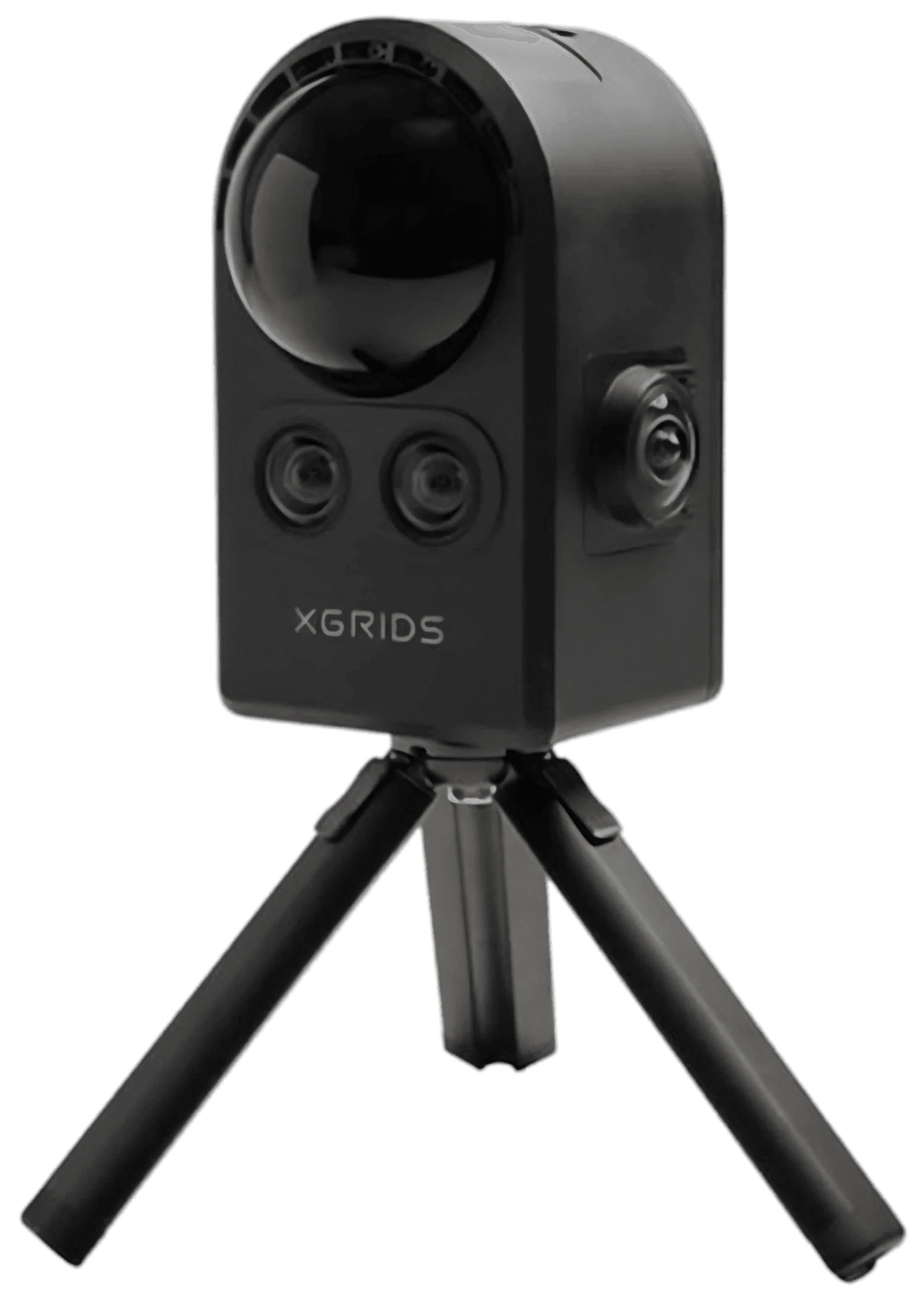
Camera-based capture optimised for photorealistic 3D Gaussian Splatting.
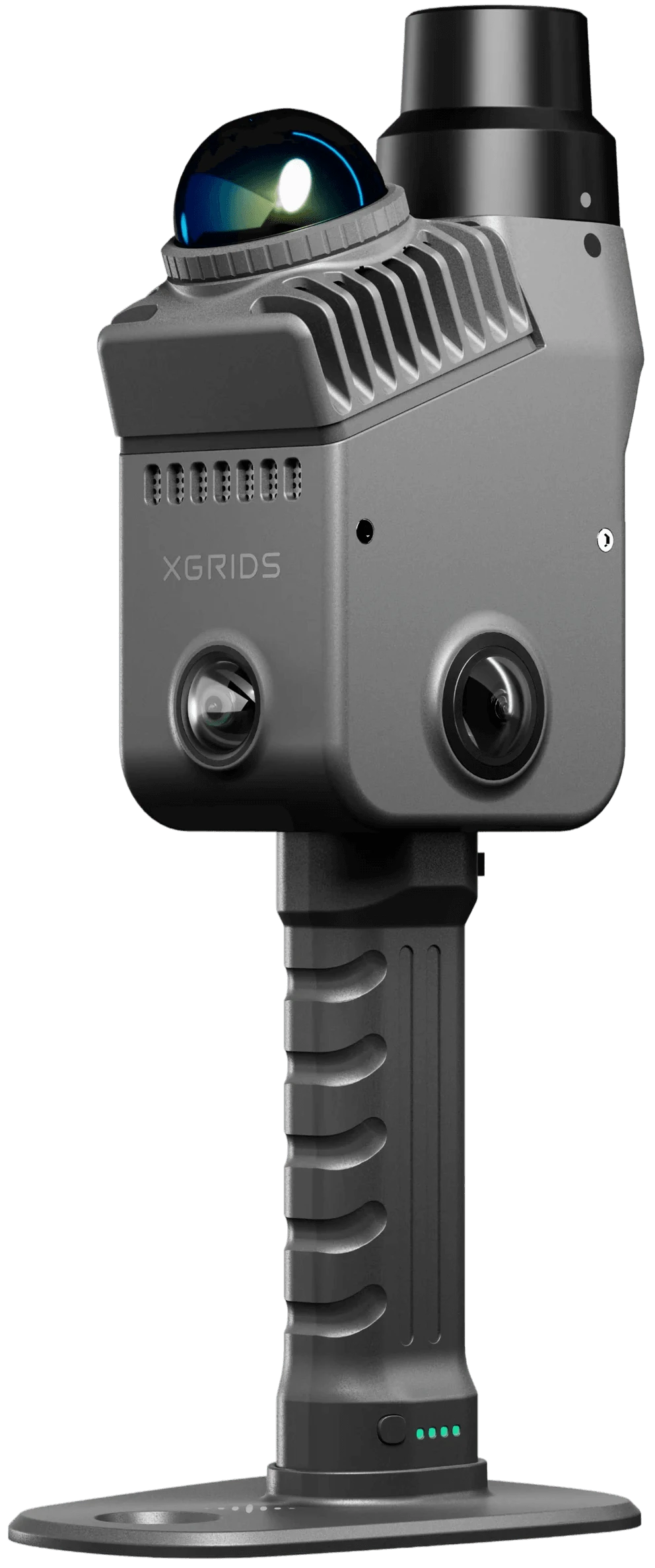
Flagship handheld SLAM scanner with built-in RTK, Volumet's primary rental device.
Capture character
01Accuracy & georeferencing
02Outputs
03Key specifications
04Rental & access at Volumet
05Choose the PortalCam when the visual result is the deliverable and nothing downstream needs to be measured. Choose the K2 when the same walk also has to produce a point cloud a BIM or survey team can work from. Spec bars describe typical workflow character, not lab benchmarks.
Comparisons and guides for the PortalCam.
Which capture method produces which kind of result, and when.
Read comparisonRenting for Gaussian Splatting work in Singapore, end to end.
Read guideWhere PortalCam captures land: 3DGS reconstruction and browser viewing.
View softwareDry rental from S$1,200/week.
The lowest weekly rate in the fleet, for teams whose deliverable is the photoreal scene rather than a measurable point cloud. Tell us your dates and site, and we confirm availability and terms.
- From S$1,200/week · weekly and short-term rentals
- Available to rent in Singapore
- Singapore pickup or delivery options
- Deposit and insurance requirements reviewed per rental
- 3DGS processing runs through Lixel CyberColor
- Southeast Asia enquiries considered case-by-case