Lixel K2 vs iPhone LiDAR.
Both capture 3D by hand, but at different scales: the iPhone’s LiDAR is an accessible mobile depth sensor for small spaces, typically paired with a scanning app like Polycam; the Lixel K2 is a professional SLAM scanner built for whole buildings and technical deliverables.
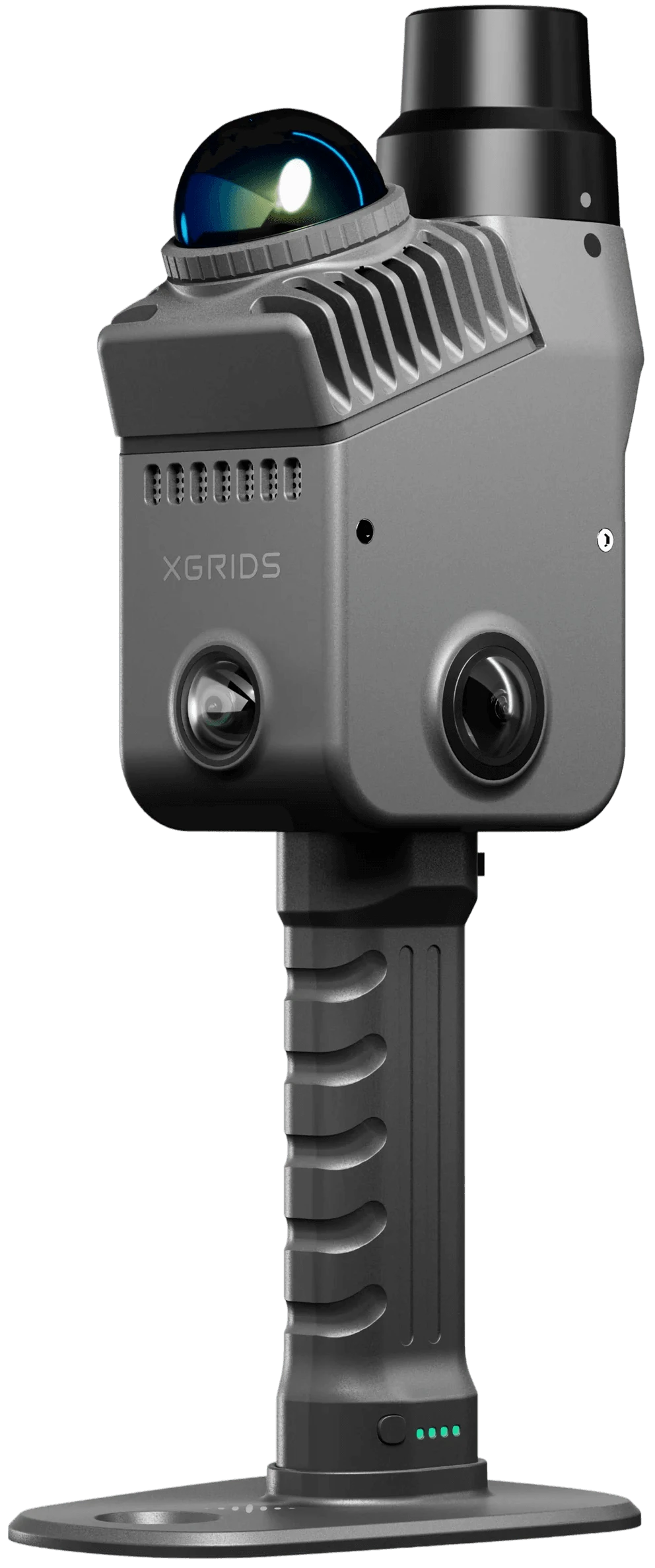
Handheld SLAM LiDAR · built-in RTK · point cloud, mesh & 3DGS from one walk.

Consumer time-of-flight depth sensor used with scanning apps like Polycam for small captures.
Who wins each category.
A quick read on where each workflow leads. These reflect typical workflow character for short-term rental projects, not lab benchmarks.
Whole buildings vs single rooms.
In your pocket, low cost, low friction.
100 m vs roughly 5 m on a phone.
Dense, structured, technical point clouds.
Great for sketches and rough measurements.
Built for BIM reference and survey data.
Choose the iPhone / iPad LiDAR for quick, low-stakes capture (a single room, a rough mesh, a fast measurement, or learning how scanning feels) using free or low-cost apps. Choose the Lixel K2 when the job is professional: whole-building coverage, dense and structured point clouds, RTK georeferencing, and outputs that hold up in Scan-to-BIM, survey reference and 3DGS. The iPhone is a brilliant entry point; it is not built for site-scale technical data. For most paid Singapore reality-capture work, the K2 is the tool that produces a deliverable a client can rely on.
Category by category.
Capture & scale
01Accuracy & data
02Outputs
03Cost & access
04Bars and category winners describe typical workflow character for short-term rental projects, not lab benchmarks. Real-world accuracy depends on site conditions, capture technique, control, and processing.
Which one fits your project?
- You need whole-building coverage
- Outputs feed BIM, survey or 3DGS
- Density and structure matter
- The result is a paid deliverable
- Capturing a single small room
- You need a rough measurement fast
- Learning how 3D capture works
- Budget is effectively zero
- Stepping up from phone capture
- You want professional data without buying
- A short project window, days or weeks
- You need the dataset, reliably
The Singapore rental angle.
Plenty of Singapore teams start with an iPhone and quickly hit its limits on anything bigger than a room. Renting the Lixel K2 from S$2,300 / week (dry, subject to approval) is a low-commitment way to get professional-grade data on a real job before deciding to invest, with pickup or delivery across Singapore and optional onboarding for first-time SLAM users.
View rental options- Weekly rental beats buying for occasional jobs
- Step up from phone capture without owning hardware
- Onboarding available for first-time SLAM users
- RTK georeferencing where outdoor conditions allow
- Accuracy depends on workflow, site conditions, control, processing, and operator experience.
- iPhone / iPad LiDAR performance varies by device model and the scanning app used.
- Volumet does not supply Apple devices; mobile LiDAR is described for comparison only.
- If your deliverable spec mandates a specific instrument class, confirm requirements before renting.
Other Lixel K2 comparisons.
Technical point-cloud workflows vs packaged virtual tours.
Read comparison DeviceHandheld SLAM walkthrough vs tripod-based static scanning.
Read comparison RentalDry rental, rental + onboarding, and evaluation tiers for the Lixel K2.
View pricingK2 vs iPhone LiDAR, answered.
Is iPhone LiDAR good enough for professional work?
How much more range does the K2 have?
Can I try the K2 before committing?
Does Volumet supply iPhones or apps?
Outgrown phone capture? Rent the K2.
Tell us your site type and what the data needs to do. We will confirm whether a Lixel K2 rental is the right step up, honestly.
Request rental availability