Handheld SLAM vs tripod scanner.
A workflow-level comparison, model-agnostic: capturing continuously on the move with handheld SLAM, versus capturing from fixed tripod stations and registering them. The Lixel K2 is the handheld SLAM example Volumet rents.
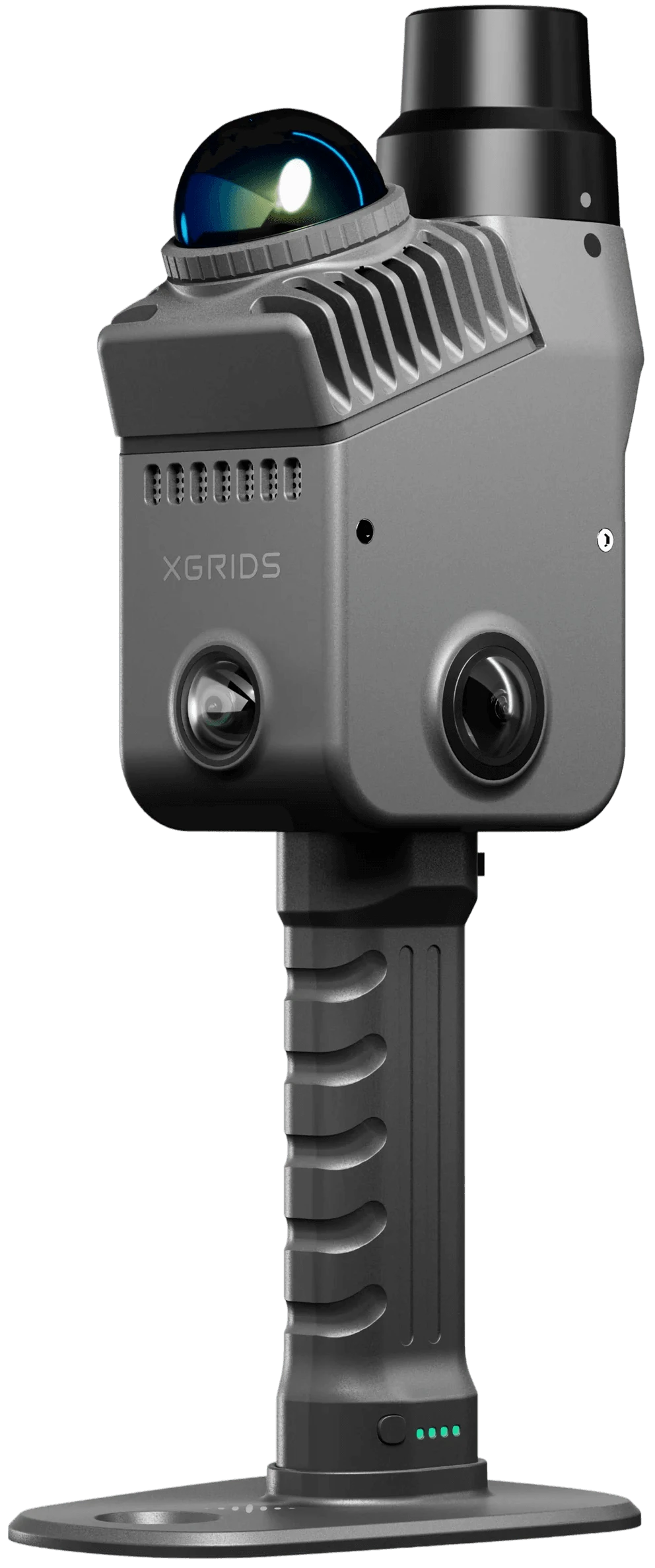
Handheld SLAM LiDAR · built-in RTK · point cloud, mesh & 3DGS from one walk.
Static station-by-station capture with registration, the classic terrestrial workflow.
Who wins each category.
A quick read on where each workflow leads. These reflect typical workflow character for short-term rental projects, not lab benchmarks.
Continuous motion, no station setups.
Fixed stations favour tight tolerances.
Stairs, tight and occupied spaces in one walk.
High density from each fixed position.
Point cloud, mesh and 3DGS from one pass.
Handheld SLAM available weekly to rent.
Choose handheld SLAM when speed and access matter most: you walk the space and capture continuously, covering multi-room and multi-level sites in far fewer site hours, with point cloud, mesh and 3DGS from one pass. Choose a tripod scanner workflow when the job is built around structured, station-by-station capture in contained areas and your team runs an established registration pipeline that favours per-station precision. Neither is universally better. For most short-term Singapore rental projects the handheld SLAM workflow, exemplified by the Lixel K2, gets usable data faster; where structured survey precision is the deliverable, the tripod workflow remains the reference.
Category by category.
Workflow & motion
01Accuracy & control
02Environments
03Outputs & access
04Bars and category winners describe typical workflow character for short-term rental projects, not lab benchmarks. Real-world accuracy depends on site conditions, capture technique, control, and processing.
Which one fits your project?
- Speed and coverage drive the job
- Sites are occupied, tight or multi-level
- You want point cloud + 3DGS in one walk
- Short site-access windows
- Capture is contained and structured
- Survey-grade tolerances are mandated
- Your team runs registration pipelines
- Per-station detail beats speed
- You want to run the SLAM workflow
- A short window, days or weeks
- You want the dataset, not a service
- Budget favours weekly rental
The Singapore rental angle.
In Singapore, site access is often the deciding factor: occupied offices, live construction, short renovation windows. The handheld SLAM workflow usually fits the window a site manager can actually give you, where setting up tripod stations may not. Volumet rents the Lixel K2 (our handheld SLAM example) from S$2,300 / week (dry, subject to approval) with pickup or delivery across Singapore.
View rental options- Handheld SLAM fits short site-access windows
- Walk-through suits occupied and irregular sites
- Tripod workflows suit contained, structured capture
- Honest guidance on which workflow fits your deliverable
- Accuracy depends on workflow, site conditions, control, processing, and operator experience.
- This page compares workflows at a category level, not specific instrument models.
- Volumet does not claim certified surveying deliverables from any rental.
- If your deliverable spec mandates a specific instrument class or workflow, confirm requirements first.
Other Lixel K2 comparisons.
Handheld speed vs station-based structured scanning.
Read comparison DeviceHandheld SLAM walkthrough vs tripod-based static scanning.
Read comparison RentalDry rental, rental + onboarding, and evaluation tiers for the Lixel K2.
View pricingSLAM vs tripod, answered.
What is the core difference between handheld SLAM and tripod scanning?
Which workflow is faster?
Is handheld SLAM accurate enough?
How do I try the handheld SLAM workflow?
Which workflow fits? Describe the project.
Send your site type, output requirements and dates. We will give an honest read on whether a handheld SLAM rental fits, or whether a tripod workflow is the better call.
Request rental availability