Lixel K2 vs terrestrial laser scanner.
A device-category comparison: handheld SLAM walkthrough capture against tripod-based terrestrial laser scanning. One trades absolute precision for speed and access; the other trades speed for structured, survey-grade accuracy.
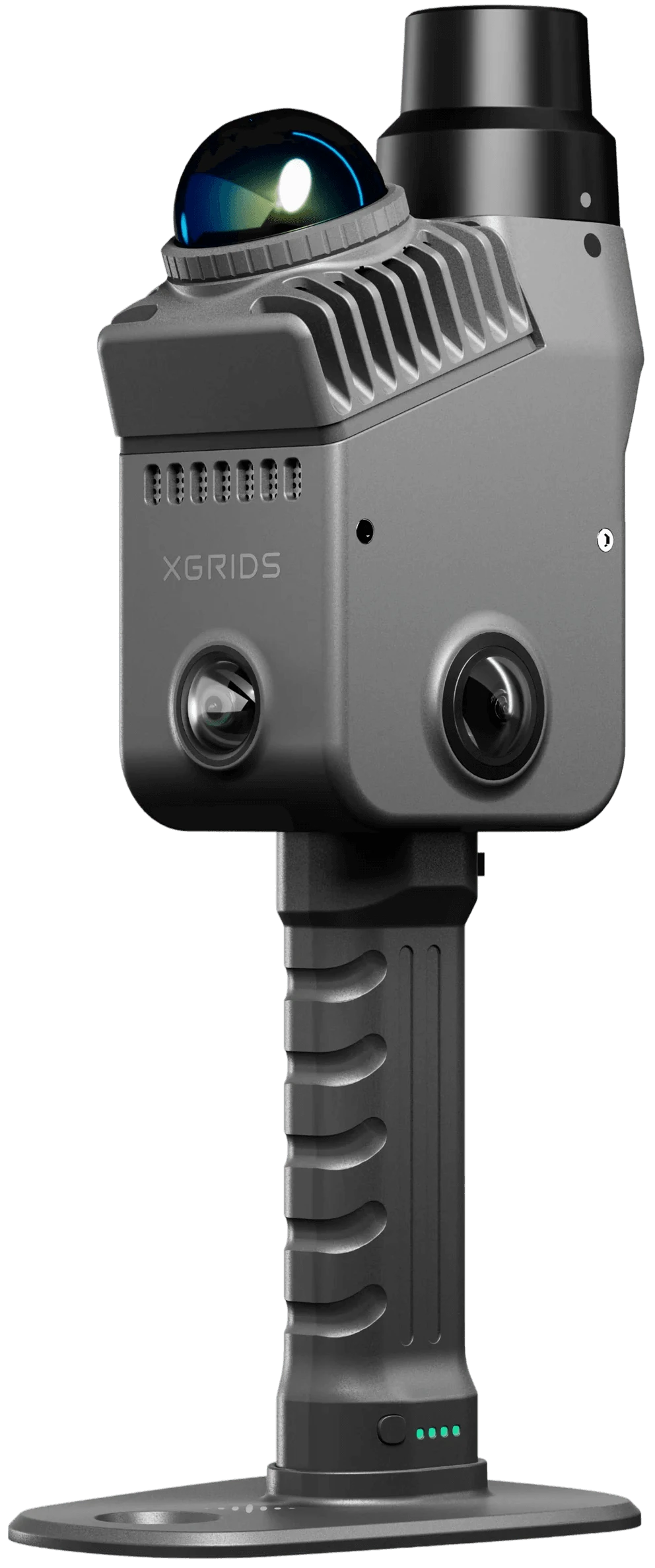
Handheld SLAM LiDAR · built-in RTK · point cloud, mesh & 3DGS from one walk.
Tripod-based station scanning representing the high-accuracy static category.
Who wins each category.
A quick read on where each workflow leads. These reflect typical workflow character for short-term rental projects, not lab benchmarks.
No station setups: walk the space once.
Tripod stability favours tight tolerances.
Long per-station reach for big, open scenes.
Stairs, tight rooms and live sites in one walk.
Adds photorealistic 3DGS from the same capture.
Weekly rental with pickup or delivery.
Choose the Lixel K2 when speed and access drive the job: walkthrough coverage of interiors, occupied sites and mixed indoor-outdoor environments, with point cloud, mesh and 3DGS from one pass. Choose a terrestrial laser scanner when the deliverable is built around structured, survey-grade station capture and your team runs an established registration pipeline. For most short-term Singapore rental projects (documentation, progress walks, Scan-to-BIM reference) handheld SLAM gets usable data in far fewer site hours; where certified survey precision is mandated, a TLS workflow remains the reference.
Category by category.
Capture & workflow
01Accuracy & range
02Outputs
03Rental & access
04Bars and category winners describe typical workflow character for short-term rental projects, not lab benchmarks. Real-world accuracy depends on site conditions, capture technique, control, and processing.
Which one fits your project?
- You need to cover space fast
- Sites are occupied, cluttered or tight
- You want point cloud + 3DGS in one walk
- Short-term rental beats owning hardware
- Capture is structured and station-based
- Survey-grade tolerances are mandated
- Your team runs TLS registration pipelines
- Per-station precision beats speed
- The window is days or weeks, not months
- You want to evaluate handheld SLAM
- Budget favours weekly rental
- You need the dataset, not a service
The Singapore rental angle.
Singapore projects tend to be access-constrained and schedule-driven: occupied offices, live sites, short renovation windows. A handheld walkthrough usually fits the window a site manager can give you, where setting up tripod stations may not. The Lixel K2 rents from S$2,300 / week (dry, subject to approval) with pickup or delivery across Singapore, and where a job genuinely needs survey-grade TLS, we will tell you.
View rental options- Weekly rental fits short site-access windows
- Walkthrough capture suits occupied interiors
- RTK georeferencing where outdoor conditions allow
- Honest guidance when a TLS workflow fits better
- Accuracy depends on workflow, site conditions, control, processing, and operator experience.
- Volumet does not claim certified surveying deliverables from any rental.
- “Terrestrial laser scanner” here describes the static-scanning category, not a specific model Volumet supplies.
- If your deliverable spec mandates a specific instrument class, confirm requirements before renting.
Other Lixel K2 comparisons.
Handheld SLAM walkthrough vs tripod-based static scanning.
Read comparison WorkflowThe workflow-level differences between moving and static capture.
Read comparison RentalDry rental, rental + onboarding, and evaluation tiers for the Lixel K2.
View pricingK2 vs terrestrial laser scanner, answered.
Is the Lixel K2 as accurate as a terrestrial laser scanner?
Which is faster on site?
Can the K2 replace a TLS for survey deliverables?
Does Volumet rent terrestrial laser scanners?
Speed or survey-grade? Describe the project.
Send your site type, tolerance and dates. We will give an honest read on whether a Lixel K2 rental fits, or point you to a TLS workflow if that is what the job needs.
Request rental availability