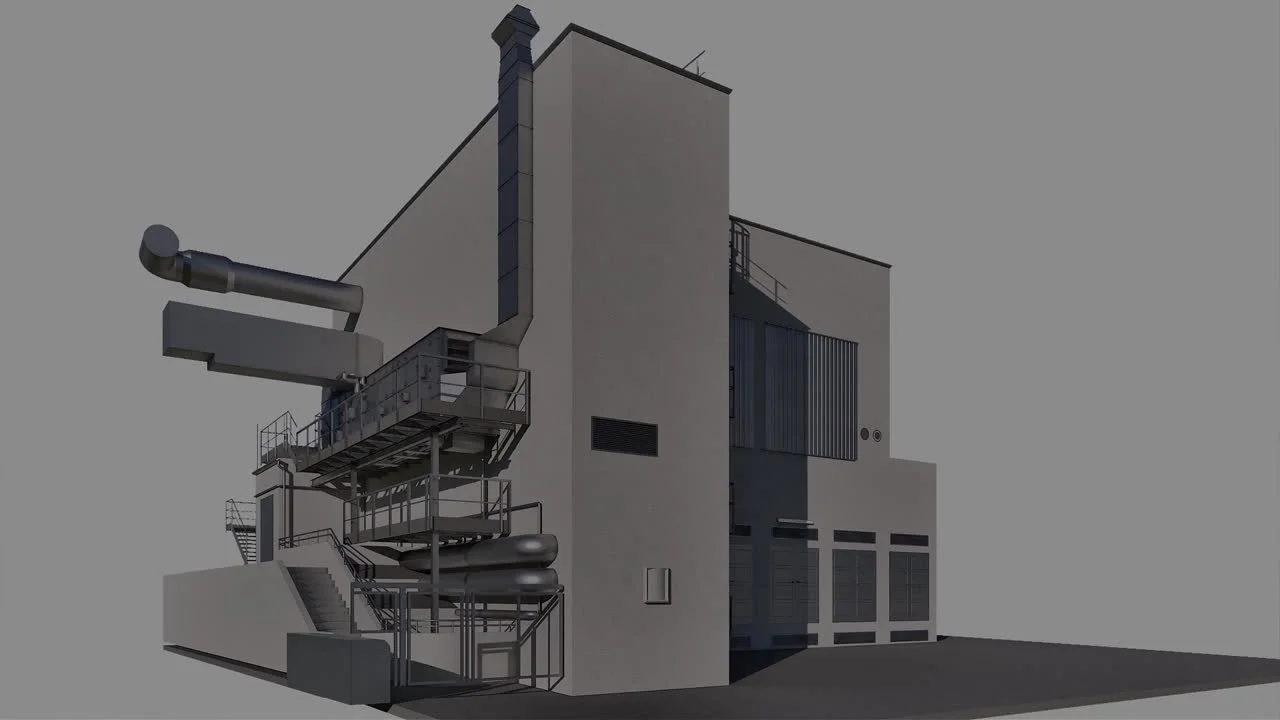
Autodesk has said on the record that Forma will replace Revit. In a press release FAQ issued around Autodesk University, the company was asked directly whether Forma replaces Revit and answered "over time, yes". Design, analysis, coordination and documentation will move progressively into the Forma industry cloud, while Revit continues as a "Forma Connected Client" and a bridge to what comes next. Autodesk says there will be no sudden transition and that investment in Revit continues. The civil side moved furthest in the same announcement: Civil 3D becomes a Forma Connected Client, with reference-based interoperability between Civil 3D, Forma and Revit, and a new Forma Street Design tool for civil engineers and transportation planners. Amy Bunszel grouped the announcements under "project intelligence", with the argument that general AI trained on the open internet lacks the project data and context the built environment needs. AEC Magazine reported the announcement.
Why this matters for documentation work in Singapore
Most scan-to-BIM work in Singapore ends up in a Revit model. That is what gets issued to architects for coordination, to contractors for construction sequencing, to facility teams for handover, and increasingly as the geometric base for a digital twin. If the authoring platform is on a ten-year path to somewhere else, the question for anyone commissioning an as-built model is not "which software do you use" but "how long does this deliverable stay useful".
There is a second, quieter issue. A scan-to-BIM model is not one artefact. It is a registered point cloud plus a modelled interpretation of it. The point cloud is vendor-neutral: it is a set of coordinates with intensity and colour, and it will open in anything. The model is not neutral. It carries the conventions, families, parameters and structure of whatever tool produced it. When a platform changes, the point cloud survives intact and the model needs work. That asymmetry is the thing to understand before you sign a scope.
What changes in practice
Very little this year. Autodesk has been explicit that there is no sudden transition, and Revit remains the production tool. If you have a submission or a coordination package due in the next twelve months, a Revit deliverable is still the correct answer and we will keep producing them.
What does change is the weight you put on the underlying data in a scope. Three things become worth specifying that were previously optional.
| Ask for | Why it matters now |
|---|---|
| The registered point cloud, in an open format | It outlives any authoring platform and can be re-modelled later |
| A registration report with control and residuals | Tells a future team how the model was tied to site coordinates |
| Element naming and parameter conventions documented | Makes a model portable rather than tool-specific |
None of that is new advice in principle. It becomes commercially relevant when the platform you are modelling into has a stated expiry direction.
What it does not change
It does not change the accuracy you can expect from a scan. Accuracy comes from the equipment, the range at which you captured, the registration method and the control network, not from the software the model is drawn in. Anyone quoting you a bare millimetre figure without those conditions attached is not giving you a number you can rely on.
It does not change your regulatory position. Singapore submissions and approvals run through the authorities' own processes and formats, and those are not tied to Autodesk's roadmap. Check the authority's own page for current requirements rather than a third-party summary, which is frequently out of date.
It does not change the case for capturing at all. A building scanned this year is scanned. The data does not degrade because a vendor changed direction.
And it does not mean you should stop modelling in Revit. Waiting for Forma to mature before you commission an as-built model means you have no model while you wait.
Our view
The honest reading is that Autodesk has removed an option. Until this announcement, a firm could reasonably assume Revit was the permanent centre of its BIM investment and plan accordingly. That assumption is now weaker. AEC Magazine makes the point that by confirming the replacement, Autodesk has validated the argument its competitors were founded on. We think that is right, and we also think it is a slower-moving story than the headline suggests: "over time" is doing a lot of work in that sentence, and no dates have been given.
The trade-off for a client is between continuity and portability. Staying entirely inside one vendor's stack is cheaper and simpler while it lasts, and it gives you the interoperability that reference-based links between Civil 3D, Forma and Revit are designed to provide. Building for portability costs a little more upfront: open-format point clouds, documented conventions, a registration report. If your building stock is long-life and your handover obligations run for decades, the second option is the one that ages better.
The open question is what "Forma Connected Client" means in practice for a firm that only ever consumes models rather than authoring them. If Revit keeps opening, editing and exporting as it does now, most Singapore practices will not notice a change for years. If the connected-client model starts to gate features or data behind the cloud, they will notice quickly. Nobody outside Autodesk can answer that today, and we would be wary of anyone who claims to.
Who should care most: asset owners with long handover horizons, facility management teams who will inherit models in five to ten years, and anyone writing a multi-year BIM execution plan. If you are a contractor modelling for a job that finishes next year, this is background noise.
What to do next
If you are commissioning an as-built model, put the point cloud in the scope. Ask for it in an open format alongside the model, with the registration report. That single change protects you against a platform decision you do not control, and it costs very little to add. Our Scan-to-BIM work is delivered on that basis, and the 3D laser scanning that feeds it is registered to site control so the cloud is usable on its own.
If your interest is longer-term and closer to the territory Forma is aimed at, look at digital twin capture. The question to ask there is not which platform renders it best but how the captured data would be ingested by a cloud system later. For sites where access is the constraint rather than the modelling, drone and aerial LiDAR covers roofs, facades and large extents that a tripod cannot reach efficiently.
If you already own scanners and want to produce your own point clouds to hold independently of any authoring platform, our equipment rental line supplies the hardware and you produce your own outputs. If you would rather we scope the capture and the model together, request a quote and we will set out what the deliverable contains, including the cloud.
Sources
- Autodesk confirms Forma will replace Revit 'over time', AEC Magazine, 15 September 2026