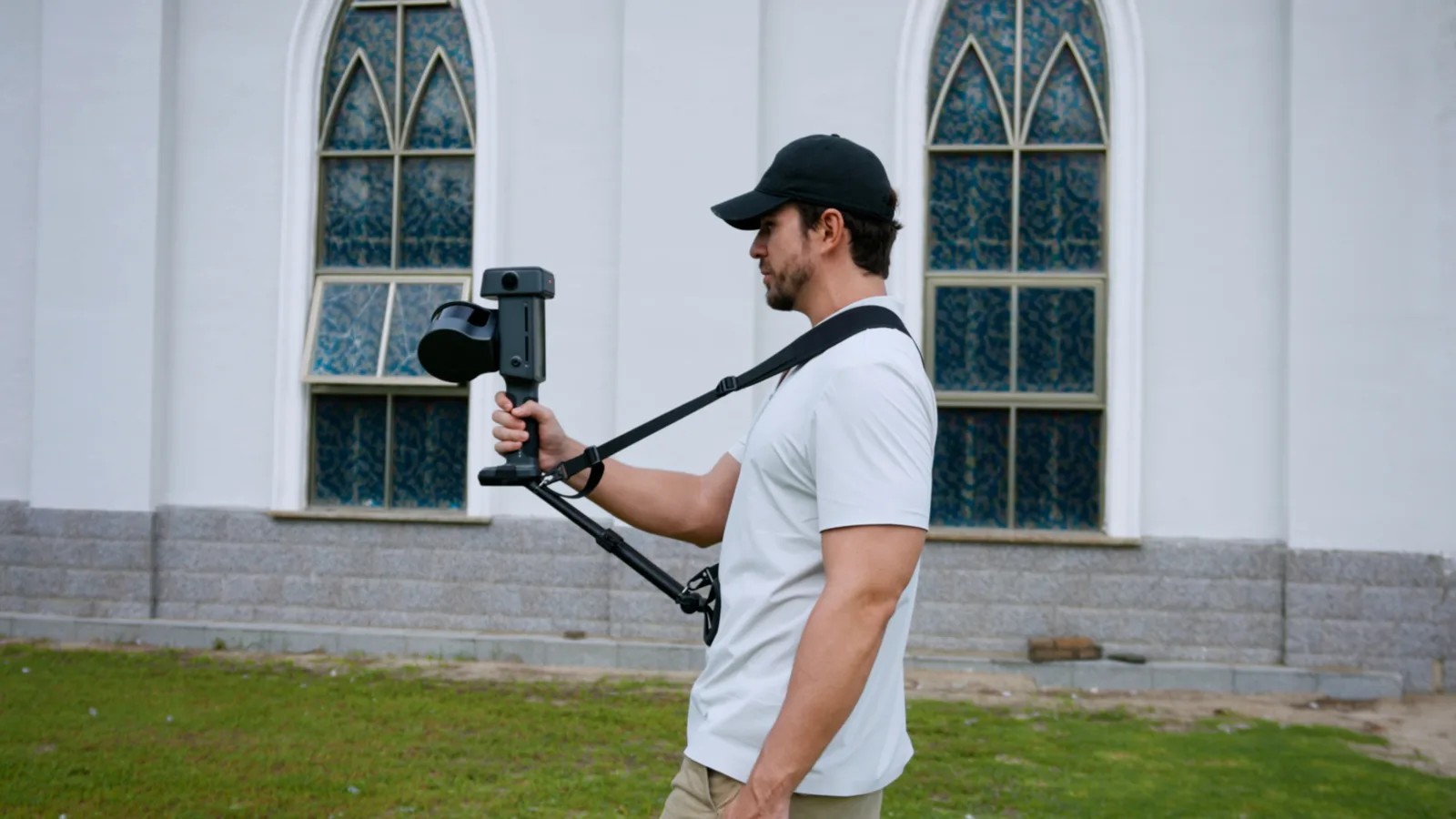
The Lixel L3 halves the post-processed relative accuracy of the Lixel L2 Pro, from 1 cm to 5 mm. It moves the RTK receiver inside the body, adds a screen, and exports far more formats. It also stops at 120 m where the L2 Pro reaches 300 m, weighs almost a kilo more, and has no vehicle or drone mounting. Newer, but not better at everything, and it does not retire the L2 Pro.
Head to head
| Lixel L3 | Lixel L2 Pro | |
|---|---|---|
| Post-processed relative accuracy | 5 mm (1σ, 500 m² test env.) | 1 cm RMSE |
| Absolute accuracy, H and V (RMSE) | 2 cm | 3 cm |
| Real-time relative accuracy | 1 cm | 2 cm |
| Real-time absolute accuracy (RMSE) | 2.5 cm | 3 cm |
| Point cloud thickness | ≤5 mm | 5 mm |
| Levelling, with RTK | 0.005° | 0.015° |
| Range | 0.7 – 120 m | 0.5 – 120 m or 0.5 – 300 m |
| Point rate | 320,000 / 640,000 pts/s | 320,000 / 640,000 pts/s |
| LiDAR field of view | 360° × 270° | 360° × 270° |
| RTK | Built in | External module |
| Cameras | 3 (1 forward + 2 panoramic), 4096 × 3072 | 2 panoramic at 48 MP + 1 MP positioning |
| CMOS sensor | 1/1.3" | 1/2" |
| HDR | DCG HDR | Not supported |
| Display | 4.3" TFT, 1,000 nits | None |
| Weight | Approx. 2.5 kg incl. battery | 1.7 kg |
| Operating time | 100 min | 90 min |
| Storage | 1 TB UFS | 1 TB SSD |
| Vehicle / UAV mounting | Not announced | Yes, both |
| Ingress protection | IP54 | IP54 |
| Availability in Singapore | Not announced | Available to rent |
What genuinely improved
Accuracy
Post-processed relative accuracy drops from 1 cm to 5 mm, and the rest of the accuracy figures move with it rather than standing still: absolute from 3 cm to 2 cm, real-time relative from 2 cm to 1 cm, and levelling with RTK fusion from 0.015° to 0.005°.
That levelling number is easy to skim past and probably matters more than the headline. Attitude error builds along a trajectory, so a scanner that sits slightly off level accumulates vertical drift over a long walk. That is what wrecks floor-flatness checks and multi-storey alignment. Three times better levelling may show up on your corridor before the relative-accuracy gain does.
One thing to be careful with: XGRIDS quotes the L3 at 1σ from a 500 m² test room, while the L2 Pro figure is RMSE. Different statistics, different conditions, same manufacturer. The L3 is clearly better, but neither spec sheet lets you say by exactly how much.
Point cloud thickness also stays put at 5 mm. If you are fitting surfaces, the noise on a plane is much the same as before.
Built-in RTK
The L2 Pro takes an external RTK module, either standard or survey-grade. On the L3 a survey-grade GNSS receiver lives inside the housing, tracking BeiDou, GPS, GLONASS, Galileo, QZSS, IRNSS and SBAS at 0.8 cm + 1 ppm horizontal. The quoted GNSS accuracy is the same as the L2 Pro module. What changes is that there is nothing to fit, nothing to forget in the office, and on a rental, nothing to lose.
The screen
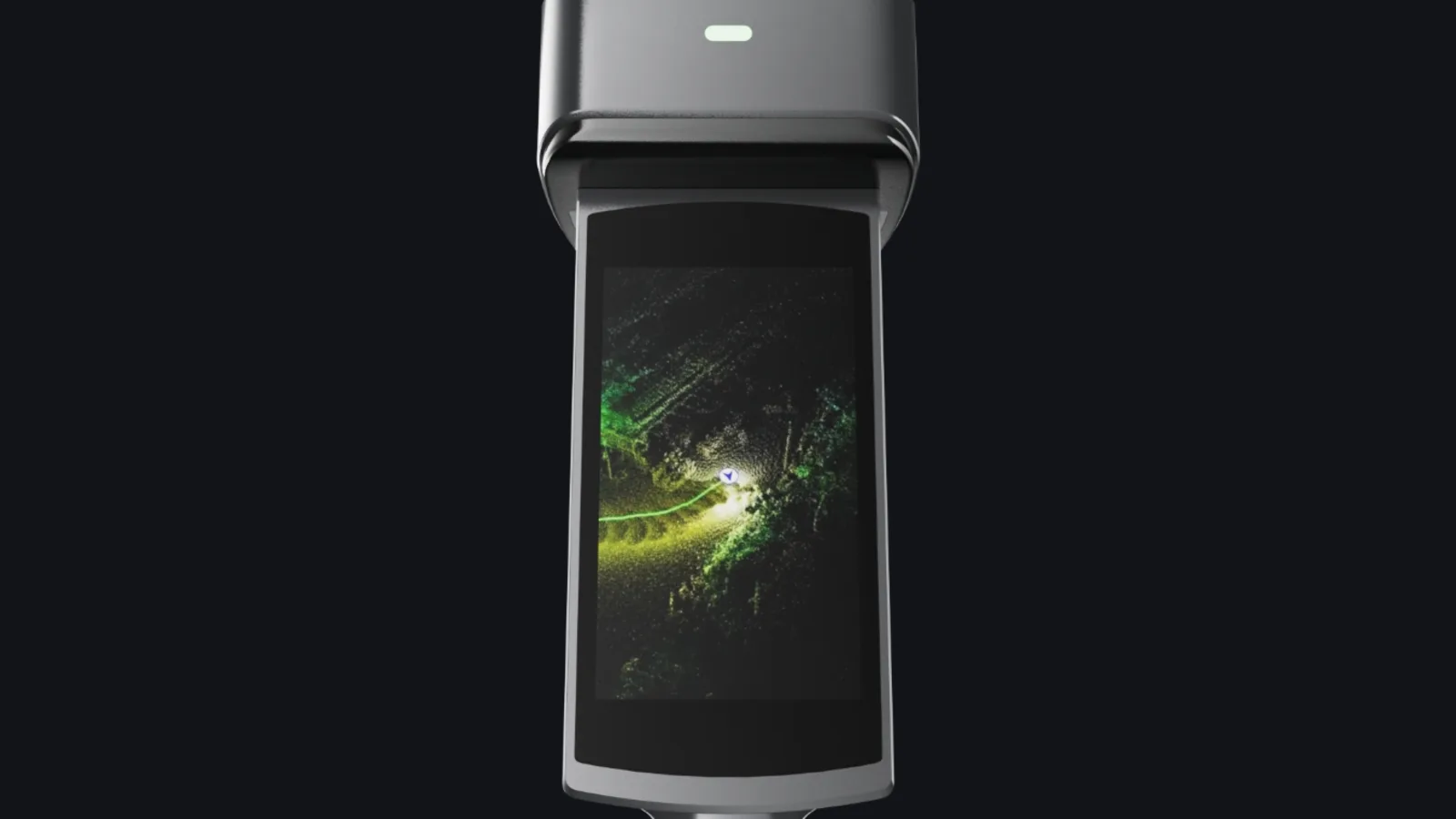
The L2 Pro has no display, so checking a scan means pairing a phone or tablet over Wi-Fi. The L3 has a 4.3" 1,000-nit panel on the device, and with the scan assistance system and on-model measurement you can confirm a capture worked while you are still in the room. Anyone who has driven back across the island to rescan a failed walk knows what that is worth.
Imaging and 3DGS
The L3 moves to a 1/1.3" sensor from the L2 Pro's 1/2", across three cameras at 4096 × 3072, and adds DCG HDR where the L2 Pro has none. Sensor area is what decides low-light performance, and handheld work happens in basements, risers and plant rooms. For 3D Gaussian Splatting this is the difference that shows most, because there the photographs are the deliverable rather than a texture wrapped over geometry.
Do not compare the megapixel numbers directly. The L2 Pro quotes 2 × 48 MP panoramic cameras with a 56 MP stitched panorama; the L3 quotes 4096 × 3072 per camera, roughly 12.6 MP each. Sensor size, HDR and output resolution tell you more than the headline figure does.
Output formats
The L2 Pro lists .las point clouds and .jpg imagery. The L3 publishes .las, .rcp, .e57, .ply and .ilas point clouds, .osgb and .obj meshes, .lcc2, .lcc and .ply for 3DGS, plus 3D Tiles and .usd. If you run a Scan-to-BIM team, native .rcp and .e57 removes a conversion step and everything that can go wrong in it.
What the L2 Pro still does better
Range
This is the one that decides most jobs. The L2 Pro comes in a 300 m configuration; the L3 stops at 120 m. On a road corridor, a large external facade, a quarry face or open infrastructure, the L2 Pro reaches surfaces the L3 cannot see at all, and no amount of extra accuracy helps with points you never measured.
Weight
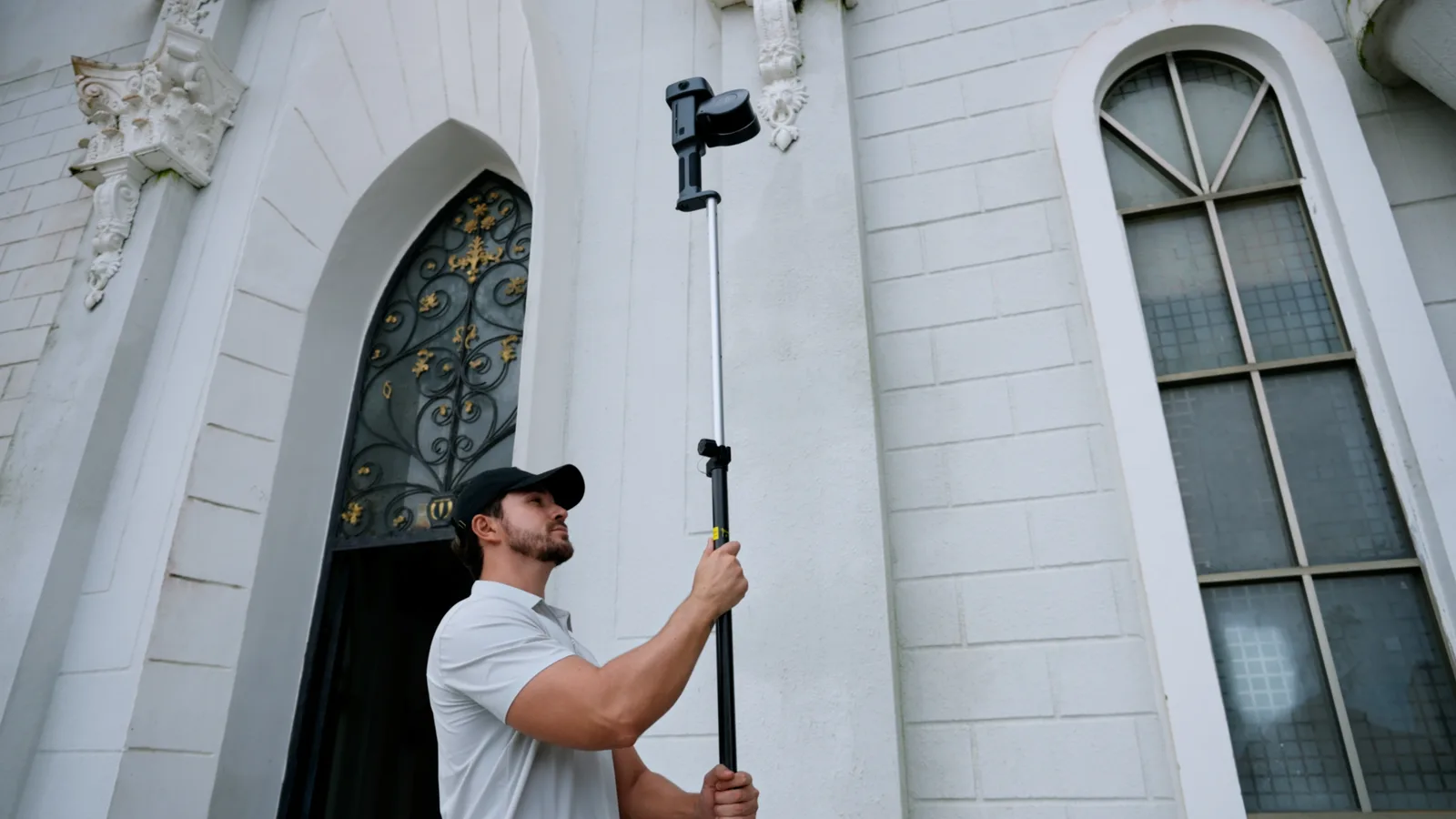
1.7 kg against roughly 2.5 kg, a 47 per cent increase. You feel that by the end of a full day, and you feel it most on multi-storey interiors with a lot of stairs.
Vehicle and UAV deployment
The L2 Pro has published drone and vehicle mounting solutions, covering capture at driving speed and flight on platforms like the DJI Matrice series. XGRIDS has announced nothing equivalent for the L3. If your work is mobile mapping rather than walking, the L2 Pro is still the only L-series option.
Which should you use?
| If your work is | Choose | Because |
|---|---|---|
| Road, rail or corridor mapping | L2 Pro | 300 m range and vehicle mounting; the L3 offers neither |
| Drone or aerial capture | L2 Pro | Published UAV mounting solution |
| High-tolerance as-built and MEP | L3 | 5 mm relative accuracy and native .rcp export |
| Photoreal 3DGS and digital twins | L3 | Larger sensor, three cameras, DCG HDR |
| Long feature-poor corridors and tunnels | L3 | Better levelling and low-feature mapping reduce drift |
| Long days of multi-storey interior walking | L2 Pro | 0.8 kg lighter |
| A project starting in the next few months | L2 Pro or K2 | Available now; the L3 has no announced regional date |
Should you wait for the L3?
For most work in Singapore, no. As-built documentation, renovation reference, Scan-to-BIM reference and progress capture are all specified in centimetres, and both devices clear that comfortably. So does the Lixel K2, at a lower rate and a lighter weight.
Wait if you have a specific reason: a client tolerance that really does need sub-centimetre relative accuracy, a 3DGS deliverable where image quality is the product, or repeated work in low-feature environments where the L2 Pro has drifted on you before. Bear in mind XGRIDS has published no price and no Southeast Asia date, and no brochure or manual for the L3, so you would be waiting without knowing how long.
We are tracking the L3 for the rental fleet and will post Singapore pricing and availability once XGRIDS confirms them. The L2 Pro is on the shelf now, and we can also run the capture for you if you would rather not operate the hardware. Tell us your site and your tolerance and we will point you at the right one.
Sources
Both specification sets come from XGRIDS' own product pages, retrieved 15 September 2026, with the launch date confirmed by XGRIDS' Japanese distributor announcement of the same day. These are manufacturer claims under the test conditions each page states. Where the two devices are measured differently, as with 1σ against RMSE, we have said so in the text.